Broken Lines in Palm: What Breaks, Islands and Forks Really Mean
10 min read·10 November 2026
Few things frighten readers more than a broken line. The internet says a broken life line means illness, a broken heart line means heartbreak, and a broken fate line means career failure. Classical palmistry is far less dramatic.
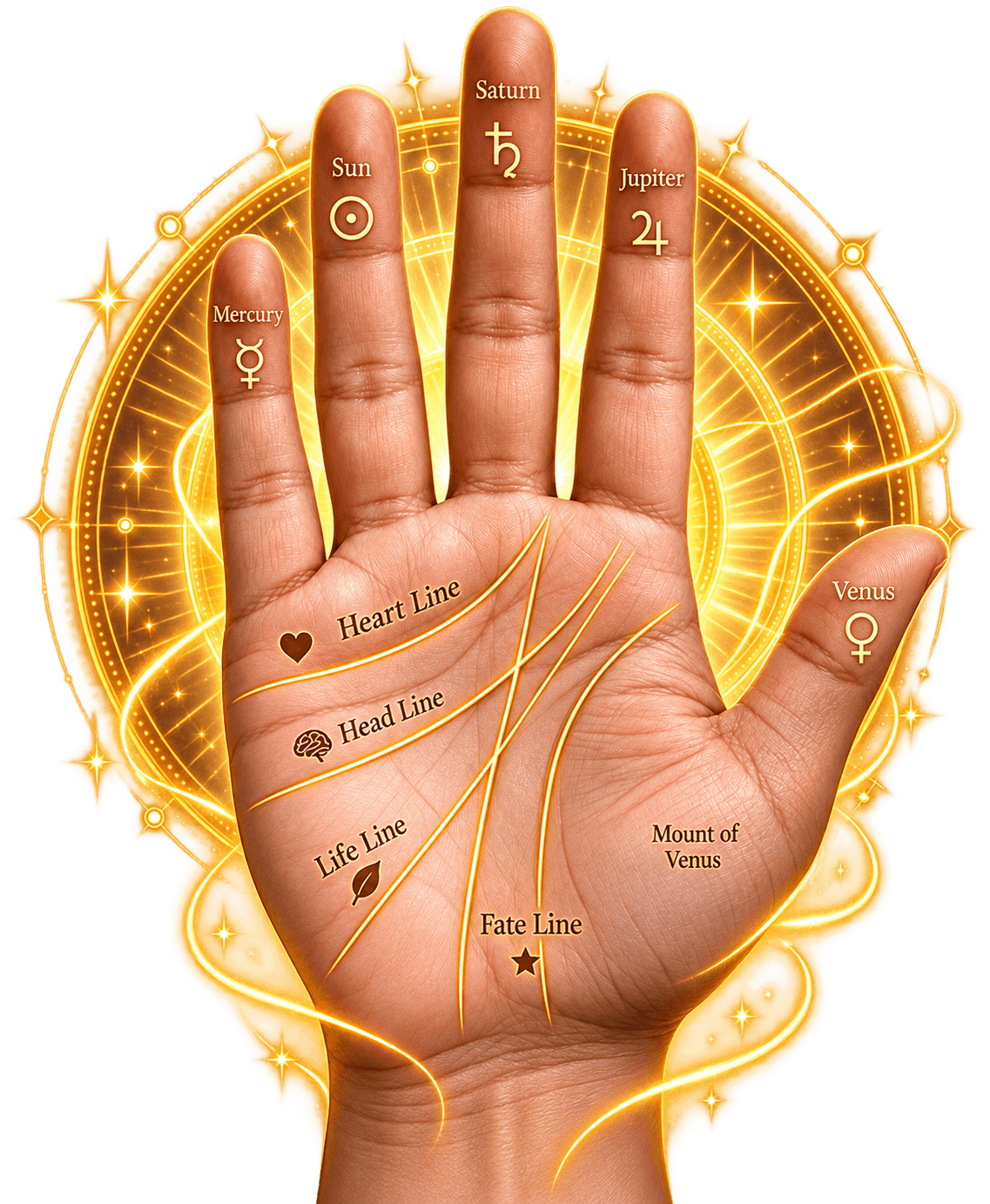
This guide explains the four kinds of interruption — break, overlap, island and fork — and how to read each on the life, head, heart, fate and marriage lines. You will also learn the one rule that prevents most fear.
Read your own palm with AI — start free
Upload one photo of your palm and get the core reading instantly in Hindi or English — no login and no card. The complete 12-area report, main-problem turning point, 5-year roadmap, partner report and printable PDF are in the one-time ₹101 Pro report.
1Break vs Overlap
A true break is a gap with no line continuing. An overlap is a break where the new segment starts slightly before or after the old one, creating a parallel step. Classical texts treat an overlap as continuity with change — a shift in direction, not a stop.
Most 'broken' lines people panic about are actually overlaps. Look closely in good light: if the two ends cross or run side by side for a few millimetres, it is a change of phase. A true gap is rarer and still describes a pause, not a permanent condition.
2Islands and What They Mark
An island is a small oval formed when a line splits and rejoins. It marks a contained period of strain, confusion or reduced energy — a chapter with a beginning and an end. On the life line it often matches a phase of illness or burnout; on the head line, a period of mental fog.
The useful question is not 'what disease?' but 'when was this, and what changed?' Islands are historical markers more than predictions. A long island suggests a long phase; a small one suggests a short one. Their position on the line gives a rough age band.
3Forks and Branches
A fork at the end of a line is usually positive: it shows expansion. A forked fate line can mean two careers or a business plus a job; a forked heart line can mean a love life with two clear phases; a forked life line can mean a move or a second wind.
Branches that rise upward are read as growth and effort paying off. Branches that fall downward are read as energy drains, worry or responsibility. The direction matters more than the number. Ten upward branches are not ten achievements; they are a tendency to keep growing.
4Line by Line
Life line break: a change in health routine, city or energy, not lifespan. Head line break: a shift in thinking, education or belief. Heart line break: a relationship chapter closing and another opening. Fate line break: a career change or a period of searching.
Marriage line breaks are the most over-read. A small break often means a long engagement, a relocation or a rough patch — not divorce. Read the line's depth and the heart line together before making any serious claim about a marriage.
5The One Rule That Prevents Fear
Never read a break alone. A break is meaningful only in relation to the line's depth, the supporting lines around it, and the dasha timing. A shallow break on a deep line is minor; a deep break on a faint line is also minor. Context decides.
A palm changes over time, and so do its breaks. The line you fear today may soften in a year. Use the reading to ask better questions about the phase you are in — and remember that a break in a line is often just the place where the story turned.
Special tip
First decide whether it is a break, an overlap, an island or a fork. Then read it with depth, neighbours and dasha. Context turns fear into information.